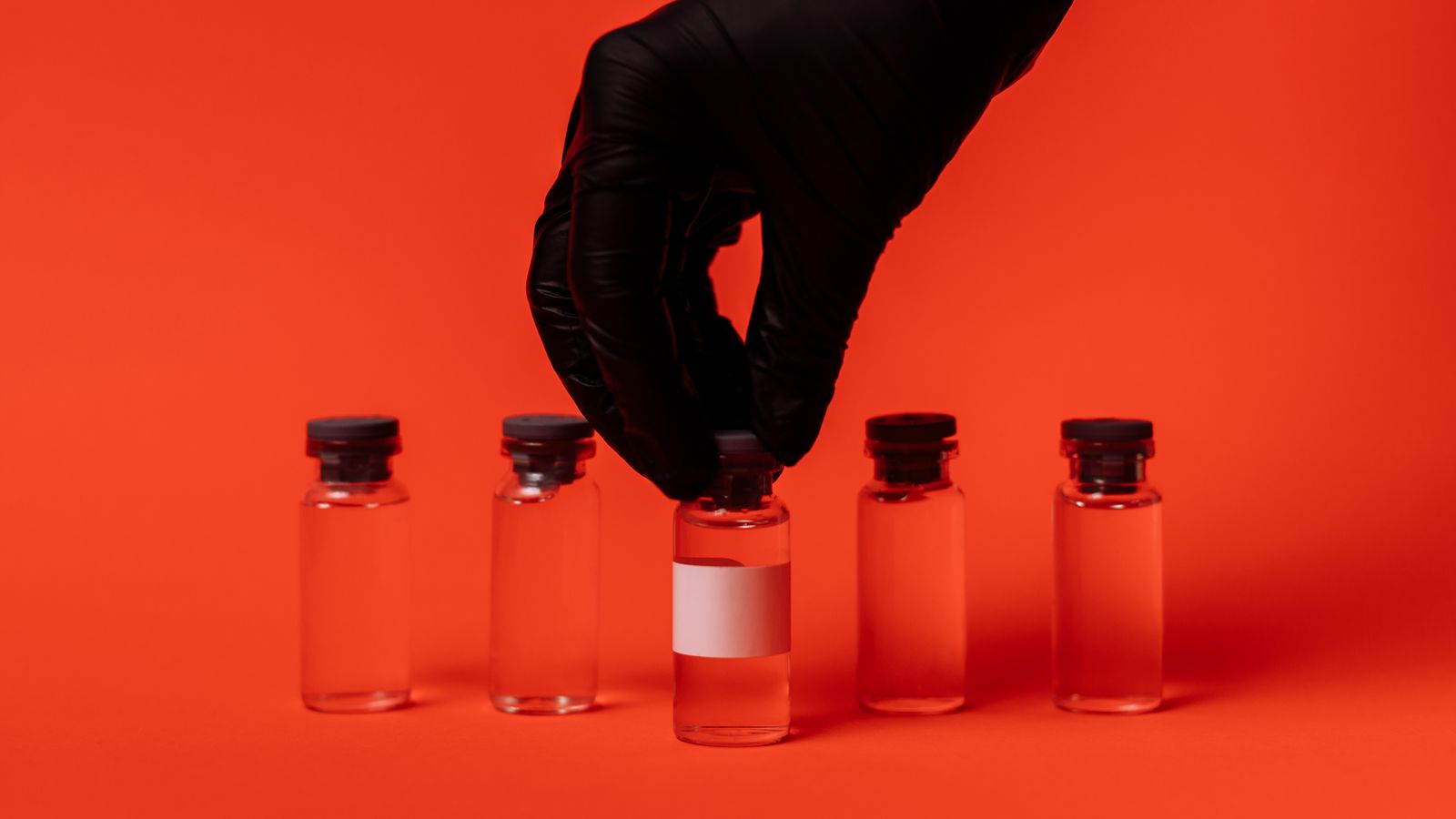
tesamorelin
Why Do Tesamorelin Vials Need to Be Protected From Light?
A look at why tesamorelin vials are packaged and stored away from light, what photodegradation means for a peptide, and how listings document it.
Medically reviewed by Catherine Dumont, MD, physician and clinical researcher — Last reviewed
Catherine Dumont, MD is a physician with clinical and research training in endocrinology and growth hormone therapeutics, with post-graduate research in GHRH analog applications and growth hormone axis disorders.
Tesamorelin vials need to be protected from light because the peptide’s structure is vulnerable to photodegradation, a process where exposure to ultraviolet and visible light energy breaks chemical bonds in the molecule. This is why tesamorelin is sold in amber or opaque vials, packaged in light-resistant cartons, and why listings routinely instruct that the vial be stored away from direct light. Understanding this requirement helps explain several details that show up in tesamorelin listings and documentation.
What Light Exposure Does to a Peptide
Tesamorelin is a synthetic peptide, a chain of amino acids held together by specific bonds. Peptide bonds and certain amino acid side chains, particularly those with aromatic rings like tryptophan, tyrosine, and the modified N-terminal group unique to tesamorelin’s structure, absorb light energy in the ultraviolet and near-visible range. When that energy is absorbed, it can excite electrons in the bond structure enough to break or rearrange them.
This process is called photodegradation. The result is a molecule that no longer matches its original structure. Depending on which bonds are affected, the outcome can range from a minor structural shift to a fragmented or aggregated peptide that no longer resembles the compound listed on the certificate of analysis (COA). Photodegradation is distinct from thermal degradation, which happens from heat exposure, and from hydrolysis, which happens from water or moisture reacting with the peptide backbone. A vial can be kept cold and dry and still degrade if it sits under laboratory lighting or near a window for extended periods.
Why This Matters for How Vials Are Packaged
Because of this sensitivity, manufacturers package tesamorelin in vials made from amber glass or, less commonly, clear glass wrapped in an opaque sleeve or shipped inside a foil-lined box. Amber glass filters out a substantial portion of the UV and blue-light wavelengths that drive photodegradation, without requiring the buyer to do anything beyond keeping the vial in its original container.
Listings that describe packaging in detail will often note “amber vial” or “light-protected packaging” as a specification, similar to how they note fill volume or lyophilization method. This detail is worth reading closely, because it tells you whether the seller is accounting for a known instability factor in the compound or leaving that responsibility entirely to the buyer.
| Packaging Detail | What It Indicates |
|---|---|
| Amber glass vial | Standard UV/visible light filtering built into the container |
| Clear vial, no outer sleeve | Full reliance on external storage conditions to limit light exposure |
| Opaque outer box or foil pouch | Added light barrier during shipping and storage |
| No storage instructions listed | Gap in documentation; does not mean the compound is stable |
How Listings Typically Phrase Storage Instructions
A well-documented tesamorelin listing usually separates two storage states: the lyophilized (freeze-dried) powder before reconstitution, and the reconstituted solution after bacteriostatic water has been added. Lyophilized powder is generally described as more stable and tolerant of brief light exposure than the reconstituted form, though “more stable” does not mean immune to it. Once reconstituted, tesamorelin is in solution, which increases molecular mobility and generally accelerates any degradation pathway, light-driven or otherwise.
This is why many listings specify that the reconstituted vial should be kept in its original amber container, wrapped in foil, or stored inside a box, in addition to being refrigerated. Refrigeration and light protection address two separate degradation mechanisms, so a listing that only mentions temperature and omits light exposure is incomplete on this point.
Reading a COA Alongside Storage Claims
A certificate of analysis documents the compound’s purity and identity at the time of testing, not its stability over time or under specific storage conditions. A COA showing 99% purity says nothing about whether that vial was stored under light-protected conditions before or after the test was run. This distinction matters when comparing two listings: a strong COA percentage and a vague storage instruction are not contradictory, they simply answer different questions. Buyers who want to line up documentation with sourcing should look at the batch-specific COA together with the seller’s stated handling practices, which is one of the things to check before comparing two offers, a topic covered in more depth across peer tesamorelin listing catalogs.
Practical Reading of the Requirement
None of this requires calculating a degradation rate, since manufacturers do not publish exact photodegradation kinetics for tesamorelin in a way that would let a buyer reconstruct a percentage loss from a given light exposure window. What a listing can tell you qualitatively is the direction of the relationship: more cumulative light exposure, particularly to reconstituted solution, correlates with a greater likelihood that the compound no longer matches its original structure by the time it reaches a lab bench. This is also why it helps to check listing claims against a HEEZ Research that documents batch-level testing independently of any single seller’s page, since a light-exposed vial that still lists an original purity figure is a documentation gap rather than proof of stability.
Some listings also cross-reference third-party research catalogs, such as peer tesamorelin listing catalogs, when describing how a given batch was verified, which gives a buyer an additional documentation trail beyond the seller’s own claims.
What to Look for in a Listing
When evaluating whether a tesamorelin listing takes light sensitivity seriously, look for a few concrete signals rather than general assurances. Does the listing specify amber or opaque packaging by name? Does it separate storage instructions for lyophilized powder from those for reconstituted solution? Does it mention keeping the vial out of direct light in addition to refrigeration? Listings that address all three are giving more complete handling information than ones that mention only temperature or only a generic “store properly” instruction.
Summary
Tesamorelin vials need light protection because the peptide’s aromatic and peptide-bond structures absorb UV and visible light in ways that can break down the molecule, a process distinct from heat or moisture damage. This is why amber glass, opaque outer packaging, and explicit storage instructions show up in well-documented listings, and why a COA’s purity figure should be read alongside, not instead of, the seller’s stated handling practices.